
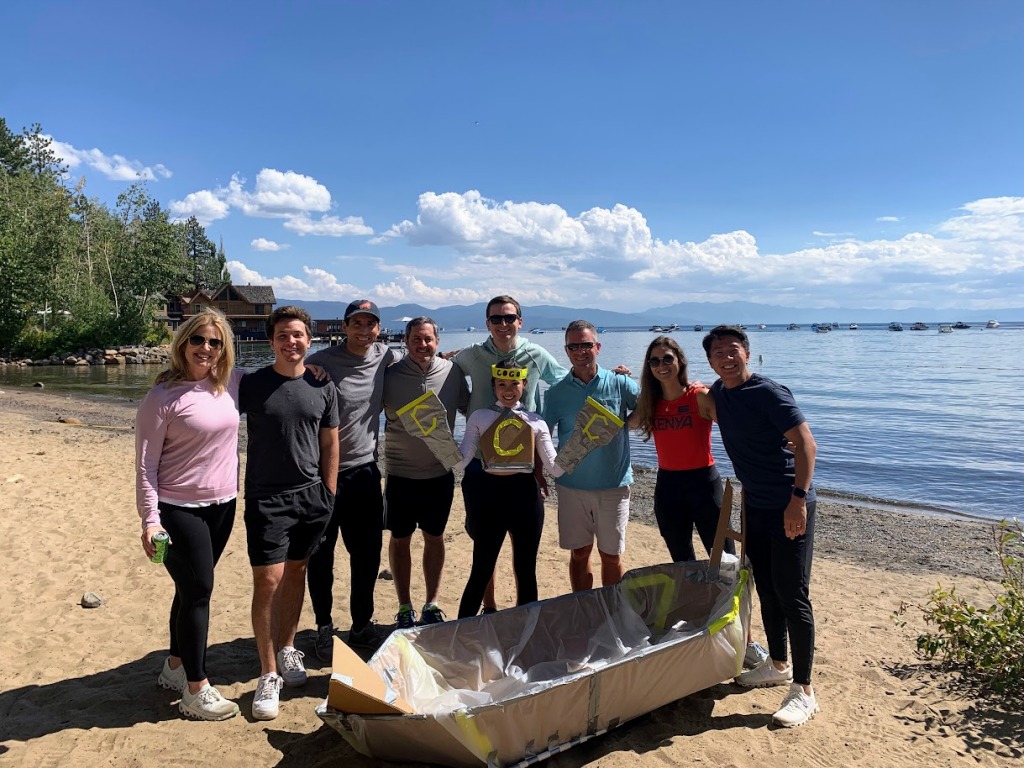
The Smartest Investment: Why Team Building Drives Stronger Companies
Category:
In today’s fast-paced, ever-evolving work environment, companies are constantly searching for an edge. Leaders want solutions that boost productivity, strengthen morale, and reinforce culture without burning out their teams or inflating budgets. New software platforms, performance metrics, and efficiency frameworks promise quick results, yet many organizations continue to struggle with disengagement, miscommunication, and high turnover. These challenges affect not only daily operations but also long-term performance, retention, and organizational health.
What many leaders overlook is that the most effective and sustainable solution is not found in a new tool or a complicated strategy. It is found in people and in how they connect with one another.
Team building, when done intentionally, is one of the smartest investments a company can make. Rather than being a “nice to have” perk or a one-time morale boost, team building is a strategic initiative that strengthens trust, communication, and performance from the inside out. At its core, team building creates space for employees to connect as humans, not just job titles. It fosters clarity, collaboration, and belonging, which cannot be manufactured in a conference room or mandated through policy. Organizations that prioritize meaningful team experiences do more than improve how people work together. They build cultures where employees want to stay, grow, and contribute.
Beyond Icebreakers: Redefining Team Building
For years, team building carried a reputation for forced icebreakers, awkward trust exercises, and activities that felt disconnected from real work. While these efforts were often well intentioned, they rarely created lasting impact or meaningful change.
Modern team building looks very different. Today’s most effective experiences are purposeful, engaging, and aligned with organizational goals. They focus on real collaboration, problem solving, and shared experiences that reflect workplace dynamics in a fresh and low-pressure environment.
When designed well, team building experiences help teams uncover strengths, improve communication styles, and develop mutual respect. True team building does not feel like an obligation. It feels like an opportunity to reset, reconnect, and return to work with a deeper understanding of one another.
Why Outdoor Team Building Creates Deeper Impact
While team building in any form offers value, outdoor team building creates a level of impact that indoor environments often cannot match. Stepping outside the office removes teams from routine patterns and everyday distractions, allowing employees to engage more fully with one another and with the experience itself.
Nature encourages presence. Without constant notifications, screens, or rigid agendas, employees tend to listen more closely, communicate more clearly, and participate more authentically. The unfamiliar setting also levels the playing field. When everyone is outside their comfort zone, collaboration becomes essential and hierarchy fades further into the background.
Outdoor environments reduce stress and improve mental clarity, making it easier for teams to adapt, problem solve, and think creatively. These benefits amplify the effectiveness of team building by helping employees show up as their best selves. When teams return to work, the connections formed outdoors feel more genuine and lasting because they were built through real presence and shared experience.
Creating Space to Collaborate Without Hierarchy
One of the most powerful benefits of team building is its ability to break down barriers. In the workplace, hierarchy, job titles, and departmental separation often limit authentic collaboration. Employees may hesitate to speak up, challenge ideas, or share concerns due to fear of judgment or repercussions.
Team building removes many of these constraints. When employees collaborate in a neutral setting, whether solving a challenge, navigating an unfamiliar environment, or working toward a shared goal, job titles become less important. What matters most is communication, cooperation, and collective problem solving.
As a result, employees gain a clearer understanding of how others think, react, and contribute. They develop stronger interpersonal awareness and a deeper appreciation for different working styles and personalities. Trust grows naturally when individuals rely on one another outside of routine roles. When teams return to the workplace, these benefits carry over. Conversations become easier, collaboration feels more natural, and conflicts are handled with greater empathy and clarity.
Building Trust and Psychological Safety
High-performing teams are built on trust and psychological safety. Employees need to feel confident that their ideas will be heard, their contributions valued, and their mistakes treated as opportunities to learn rather than reasons for punishment.
Team building plays a critical role in creating this foundation. By placing employees in situations that require cooperation and vulnerability, team building normalizes asking for help, sharing perspectives, and supporting one another.
When psychological safety is present, teams are more innovative, engaged, and effective at problem solving. Employees are more willing to participate, contribute ideas, and take thoughtful risks. This sense of safety develops through shared experiences that reinforce trust and respect over time.
Building Trust Faster Through Shared Outdoor Experiences
Trust often takes time to build in the workplace, but outdoor team building accelerates that process. When teams face challenges together, whether navigating unfamiliar terrain or working toward a shared objective, trust is built through action rather than conversation.
These moments create shared memories that strengthen bonds. Employees learn they can rely on one another, communicate honestly, and work together effectively even when conditions change. That trust carries directly into daily work, improving accountability, openness, and collaboration, particularly during high-pressure situations.
Morale Is Everything
Morale is one of the most underestimated drivers of workplace success. Employees who feel disconnected, undervalued, or burned out rarely perform at their best. Over time, low morale leads to disengagement, absenteeism, and turnover, all of which are costly for organizations.
Team building provides a meaningful reset. Stepping away from daily responsibilities allows employees to recharge mentally and emotionally. It reminds them why they enjoy working with their colleagues and how their individual efforts contribute to something larger. Organizations that invest in team building consistently see stronger engagement, higher job satisfaction, and improved loyalty.
Preventing Burnout Through Connection
Burnout has become one of the most pressing challenges in modern workplaces. Heavy workloads, constant connectivity, and unclear boundaries leave employees feeling overwhelmed and exhausted. While time off is essential, it is often not enough on its own.
Team building helps address burnout by strengthening relationships and restoring a sense of purpose. When employees feel supported by their peers and connected to their organization, they are better equipped to handle stress and navigate challenges. Connection acts as a buffer against burnout and reinforces that employees are not working in isolation.
Supporting Employee Well-Being Through Outdoor Team Building
Employee well-being is essential to sustainable performance. Outdoor team building supports mental and emotional health by combining physical movement, fresh air, and meaningful social interaction.
Time spent outdoors reduces stress and mental fatigue. When paired with positive team experiences, it creates a powerful reset. Employees return to work feeling refreshed, supported, and more connected to their colleagues, which strengthens engagement and long-term performance.
Strengthening Problem Solving and Critical Thinking
Quality team building experiences naturally strengthen problem solving and critical thinking skills. When teams face unfamiliar or complex challenges together, they must communicate clearly, adapt quickly, and draw on diverse perspectives.
These experiences help teams make better decisions, increase adaptability, think more creatively, and collaborate effectively under pressure. The skills developed during team building translate directly into workplace performance and help teams navigate real-world challenges more confidently.
Developing Leadership Skills Outside the Office
Outdoor team building is also a powerful tool for leadership development. In traditional work settings, leadership roles are clearly defined. Outdoors, leadership becomes fluid and situational.
As teams navigate challenges, individuals step forward based on their strengths. Some lead through communication, others through strategy, encouragement, or adaptability. This reveals leadership potential that may not always surface in the office.
For emerging leaders, these experiences build confidence and decision-making skills. For established leaders, they provide insight into how leadership style affects team dynamics in real time. This strengthens leadership at every level of the organization.
Reinforcing Company Culture in a Meaningful Way
Company values are often displayed on walls and websites, but they hold little meaning if they are not lived. Team building brings culture to life by allowing employees to experience company values in action.
When experiences are aligned with organizational values, they reinforce expectations in an authentic and memorable way. Employees do not just learn what the company stands for. They feel it. This creates deeper alignment, stronger culture, and greater commitment.
Improving Retention and Reducing Turnover
Employees rarely leave a job because of the work itself. More often, they leave because of the environment. A lack of connection, poor communication, and feeling undervalued are among the most common reasons people seek opportunities elsewhere.
Team building addresses these challenges by strengthening relationships and fostering a sense of belonging. When employees feel connected to their team and invested in the company’s culture, they are far more likely to stay engaged and committed.
Team Building as a Long-Term Strategy
The most successful organizations do not treat team building as a one-time event. They see it as an ongoing investment in their people.
Regular opportunities for connection and collaboration reinforce trust and keep teams aligned as organizations grow and evolve. Effective team building is intentional, inclusive, and adaptable, evolving alongside the needs of the team and the goals of the organization.
Aligning Outdoor Team Building with Business Goals
The most effective outdoor team building programs are intentionally designed to align with company goals. Rather than offering generic activities, successful experiences reinforce the skills and values teams need most.
When outdoor team building supports collaboration, communication, leadership development, organizational change, and team reconnection, it becomes an extension of business strategy rather than a break from it.
Measuring the Long-Term Value of Outdoor Team Building
While the benefits of outdoor team building are often felt immediately, the long-term impact is where true value lies. Companies that invest in meaningful team experiences see consistent improvements in engagement, retention, and overall performance.
Employees who feel connected to their team and aligned with company culture are more motivated, productive, and loyal. Over time, this builds stronger teams, healthier workplaces, and more resilient organizations.
A Culture People Want to Be Part Of
Ultimately, team building creates a stronger, more connected company culture. It fosters an environment where people feel motivated, understood, and excited to contribute.
When collaboration replaces competition and trust fuels performance, productivity follows naturally. Team building is not an expense. It is an investment in people, performance, and the future of the organization.
Share this:
Visitors Love To Adventure With Us

Blog
- The Smartest Investment: Why Team Building Drives Stronger Companies
- The Power of Team Building in School Communities
- Inherent vs. Formal Team Building: Choosing the Best Outdoor Experience
- Creating Stronger Family Bonds with Team Building
- Tahoe Daily Tribune: State of the Lake report shows extreme highs and lows of the basin, 2023 on track to follow in historic data
- Tahoe Daily Tribune: Report: Pollution from sediment in Lake Tahoe reduced by 600k pounds in 2021
- Moonshine Ink: Mission Accomplished
- East Bay Times: Bear canisters now mandatory at popular Tahoe backpacking area
News


2026 © All Rights Reserved. Terms of Service